
I Owe, I Owe—It’s Off to Work I Go!

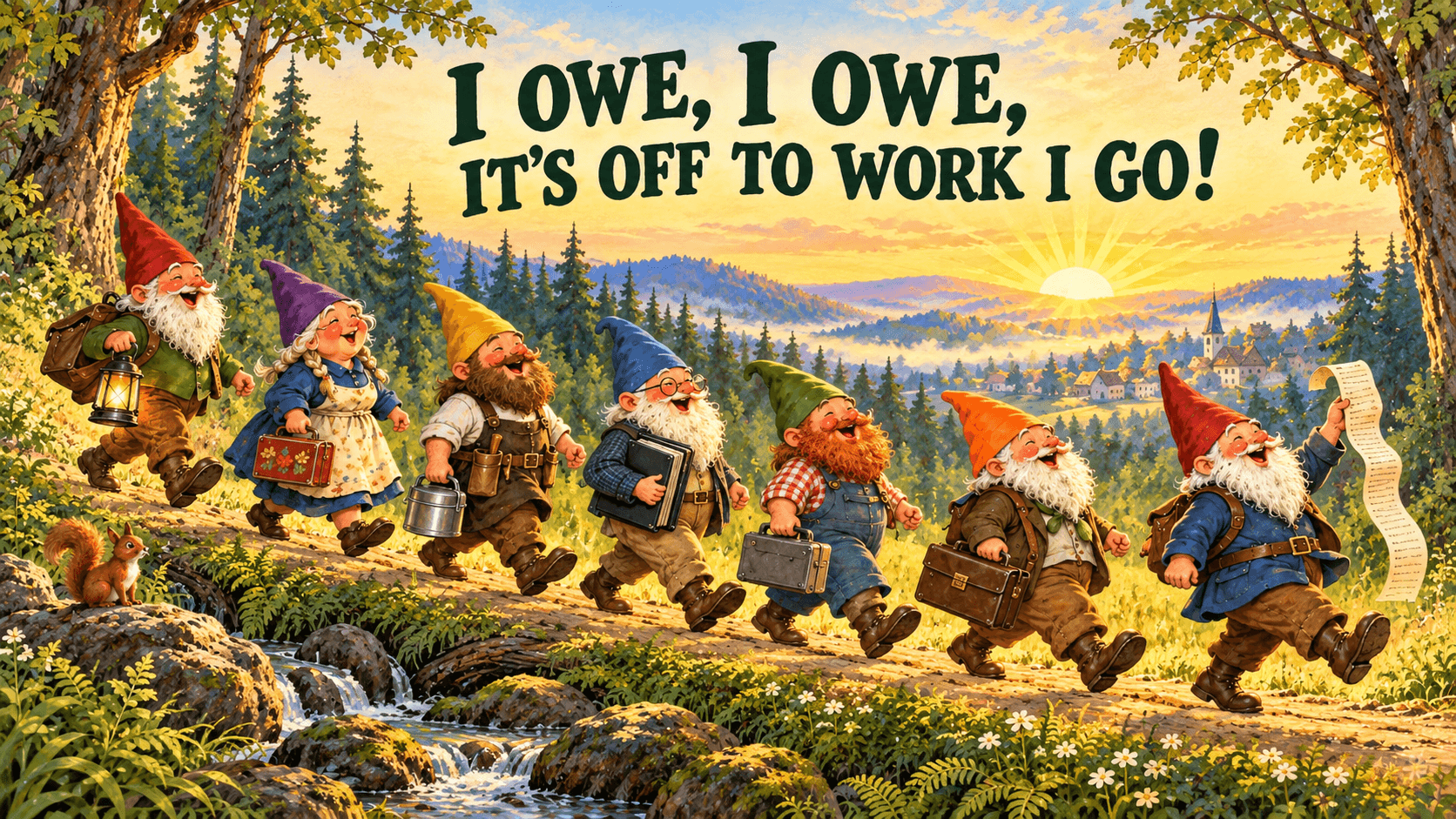
The picture makes us smile, but for millions of people it describes a painful reality:
“I owe, I owe, so it’s off to work I go!”
There is nothing wrong with working hard. Work gives us purpose, dignity and the ability to provide for ourselves and our families. But there is a big difference between working because you want to build a better future and working simply to keep up with yesterday’s spending.
As I share in Against All Odds, Margo and I had our own financial wake-up call at the age of 24. We realised that we had been sucked into the trap of debt and credit cards. We were earning money, but too much of it already belonged to somebody else before it ever reached us.
We decided that if our financial future was going to change, we had to change our spending habits.
That decision began our journey towards becoming better managers of our money, escaping the debt trap and taking control of our financial destiny.
The Trap of Easy Monthly Payments
The old PBS FRONTLINE documentary, The Secret History of the Credit Card, exposed how the credit-card industry learned to make borrowing incredibly easy—and extremely profitable. Although the programme focused on America, the culture it described has spread around the world.
We are encouraged not to ask, “What does it cost?” but instead, “Can I afford the monthly payment?”
That small change in thinking has sucked millions of people into years of repayments. Cars, furniture, holidays, phones and everyday purchases can all appear affordable when they are divided into small monthly amounts. But enough “easy payments” eventually create a very difficult life. The 2004 PBS investigation examined the techniques used to encourage consumers to take on increasing amounts of debt. (pbs.org, cgi.pbs.org)
Three Top Tips for Becoming Debt-Free
1. Face the numbers
Write down every debt you owe, including the balance, interest rate and monthly payment. You cannot defeat an enemy you refuse to identify. The total may initially frighten you, but clarity replaces anxiety with a plan.
2. Stop creating new debt
You cannot empty the bath while the taps are still running. Stop using credit to maintain a lifestyle your present income cannot support. Before taking on another payment, ask: “Do I really need this—and what will it ultimately cost me?”
Build a small emergency fund so an unexpected expense does not immediately send you back to the credit card.
3. Attack one debt at a time
Continue making the minimum payments on everything, but concentrate every available extra pound on one debt. You might begin with the smallest balance to create momentum or the highest interest rate to reduce the total cost. When one payment disappears, roll that money into the next debt.
Progress may seem slow initially, but momentum grows surprisingly quickly.
Take Back Your Future
Margo and I did not change our financial destiny through one dramatic decision. We changed it through many disciplined decisions repeated over time. Your daily disciplines determine your financial future.
Debt promises you something today in exchange for your freedom tomorrow. Becoming debt-free reverses that transaction: you make sacrifices today so that tomorrow belongs to you.
You will never be totally free until you are debt-free.